

Mercury turns retrograde on October 24, 2026, in the sign of Scorpio, and stays that way until November 13, according to the Farmers' Almanac, which gives its dates in Eastern Time. For three weeks, by long habit, people will blame the planet for lost luggage, garbled emails and contracts that go sideways.
The planet will be doing nothing unusual. It will not slow down, stop or reverse. For much of that stretch it will be close to impossible to see.
What changes is the angle. The backward motion has been watched for thousands of years, and every serious source on the subject agrees that it is an illusion.
A planet on the inside track
Mercury is the smallest planet and the closest to the Sun, and NASA calls it the fastest, completing an orbit every 88 Earth days at nearly 29 miles per second. Earth takes a year. Both travel around the Sun in the same direction, and neither ever turns back.
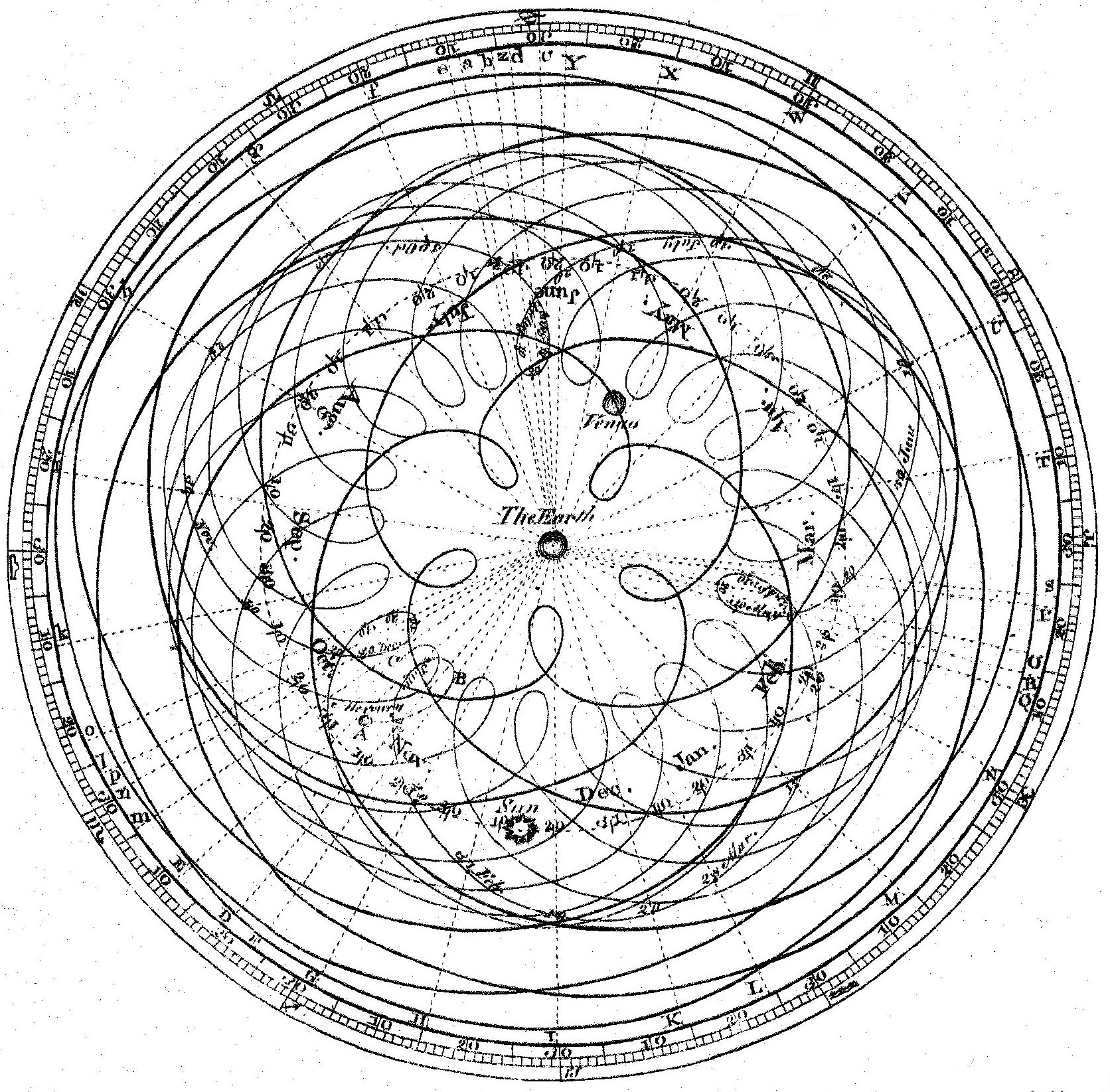
Picture two runners on a track, with Mercury in the inside lane. When Mercury is on the far side of the Sun, its motion carries it one way across our sky against the background stars, which astronomers call direct or prograde motion. When it swings around to the near side, passing between Earth and the Sun, the same forward motion is seen from the front instead of from behind, and against the stars it seems to slide the other way. That slide is apparent retrograde motion. The word comes from the Latin retrogradus, "backward step."
EarthSky's editors explain the outer planets with a highway comparison: overtake a slower car and, for a moment, it seems to drift backward. For Mercury, as the Farmers' Almanac puts it, the mechanism runs in reverse, because Mercury laps us.
Why it keeps happening
The key moment is called inferior conjunction, when Mercury lines up between Earth and the Sun. According to the figures gathered in Wikipedia's article on the planet, this happens every 116 days on average, though Mercury's lopsided orbit stretches the interval anywhere from 105 to 129 days. The retrograde stretch brackets that alignment, running 8 to 15 days on either side of it, and the same eccentric orbit explains why some retrogrades are shorter than others.
A cycle of roughly 116 days fits into a year a little more than three times, which is why the Almanac counts three retrogrades in a normal year and four in an occasional one. The 2026 run falls February 26 to March 20, June 29 to July 23, and the autumn period.
Here is the part horoscopes rarely mention. At inferior conjunction Mercury turns its unlit side toward us, its "new" phase, and sits in the Sun's glare. Its mean brightness at that point is magnitude +5.93, against minus 2.48 at its brightest. Mercury is also near its closest to Earth, which can be as close as 51.1 million miles. The planet blamed for three weeks of chaos is, at the heart of them, effectively invisible.
The jumping planet
Ancient watchers noticed Mercury's erratic habits long before anyone could explain them. The earliest known records come from the MUL.APIN tablets, probably made by an Assyrian astronomer around the 14th century BC, which give it a name translated as "the jumping planet." The Babylonians called it Nabu, after the messenger of the gods. Greek observers worked out by about 350 BC that the morning and evening appearances were one body, and they called it Stilbon, "twinkling," and Hermes, for its fleeting motion. The Romans named it for their own swift messenger god.
That messenger role underlies the astrological reading. In the tradition the Farmers' Almanac summarizes, Mercury governs communication and transportation, so when it appears to move backward its good influence on those areas is said to weaken. Hence the customary caution about contracts, electronics, vehicles and tight travel connections, and the "shadow period" of about two weeks on either side. For the autumn 2026 retrograde the Almanac has the shadow closing on November 29.
Circles on circles
For Greek astronomers, who assumed Earth sat still at the center of everything, retrograde loops were a genuine problem. Heavenly bodies were expected to move uniformly in perfect circles, and the planets visibly did not.
The answer, as Britannica's entry on the Ptolemaic system describes it, was the epicycle: a planet rides a small circle whose center is carried around Earth on a larger one, the deferent. Because half of each small circle runs against the larger motion, the planet appears to slow, stop and back up. The principles were known to Hipparchus around 150 BCE, and Ptolemy, working in Alexandria around 150 CE, built them into an accurate predictive model recorded in his Almagest. It lasted, with adjustments, into the 16th and 17th centuries.
Erhard Scholz, in a 2022 commentary, argues that this pairing was no accident. The Sun-centered hypothesis of Aristarchos of Samos and the invention of epicycles both belong to the 3rd and 2nd centuries BC, and converting a heliocentric picture into the view from Earth, with ancient geometry alone, leads naturally to epicycles. Copernicus (1473 to 1543) put the Sun at the center, and Johannes Kepler (1571 to 1630) replaced the circles with ellipses. The loops stopped being a property of the planets and became a property of where we stand.
What the evidence shows
The Farmers' Almanac, which publishes the dates every year, is unusually blunt: there is "no measured evidence" that the planet is to blame. The wider scientific case against astrology rests on controlled tests, the best known being Shawn Carlson's 1985 study in Nature, which ended with a damning verdict. Even that has been contested. In 2010 Suitbert Ertel reanalyzed Carlson's data and found that astrologers matched personality profiles to birth charts better than chance, with marginal statistical significance. He still judged the results "insufficient to deem astrology as empirically verified."
Mercury retrograde makes a vaguer claim than a personality profile, which makes it harder to test at all. Three windows of about three weeks each add up to a sizable slice of every year, and ordinary mishaps are bound to land inside them and be remembered. The Almanac's own suggestion is to treat the dates as a scheduled pause, a stretch labeled "check your work."
A backward sunrise
There is one place where the Sun truly appears to run in reverse, and it is Mercury itself. The planet turns once every 59 Earth days, and its orbit is so eccentric, swinging from 29 million to 43 million miles from the Sun, that near its closest approach its orbital motion outpaces its spin. For about four Earth days on either side of that point, an observer on the surface would see the Sun stall and drift backward. At certain spots it would rise a little more than two-thirds of the way over the horizon, sink back below it, and then rise a second time.
Genuine retrograde motion exists elsewhere, too. Venus spins the opposite way from every other planet, and Neptune's largest moon, Triton, orbits against its planet's spin. But the Mercury retrograde on the calendar is a matter of perspective from a moving platform. The more spectacular reversal belongs to anyone standing on Mercury itself, watching the morning Sun come up, change its mind, and come up again.