
In 1954, a government neuroscientist climbed into a tank of warm salt water in the dark and stayed there for hours, to see what his brain would do with nothing to do. What it did was not fall asleep. That result launched one of the oddest careers in American science, and an industry that now sells the same experience by the hour.
The scientist was John Cunningham Lilly. He is remembered for inventing the isolation tank, for trying to talk to dolphins, and for giving some of those dolphins LSD. All three are accurate.
A serious scientist first
Lilly was born in St. Paul, Minnesota, on January 6, 1915. He took a degree at Caltech in 1938 and a medical degree at the University of Pennsylvania in 1942. According to his New York Times obituary, he spent the Second World War studying the physiology of high-altitude flight, and in 1951 published work on displaying the brain's electrical activity on a screen.
This was a real researcher with real credentials. A pulse waveform he developed for stimulating the brain electrically is still used in neural implants, where it is known as Lilly's wave.
In 1953 he joined the U.S. Public Health Service, and at the National Institute of Mental Health he turned to a question that sounds simple. If every source of outside stimulation is removed, what happens to the mind?
The answer required a machine. Lilly's solution was a dark, soundproofed tank of warm salt water in which a person could float for long periods, cut off from light, sound, and most of the sensation of having a body. The Times obituary records that he suspended himself and another scientist in it for hours as the first subjects. A 2018 paper in PLOS ONE credits the early work jointly to Lilly and his NIMH colleague Jay Shurley.
The mind, it turned out, does not switch off when the inputs stop. It stays awake and starts generating its own material: imagery, reverie, long vivid trains of thought. For Lilly this was the central discovery of his life. Consciousness was not just a reaction to the world. It ran on its own.
The dolphin years
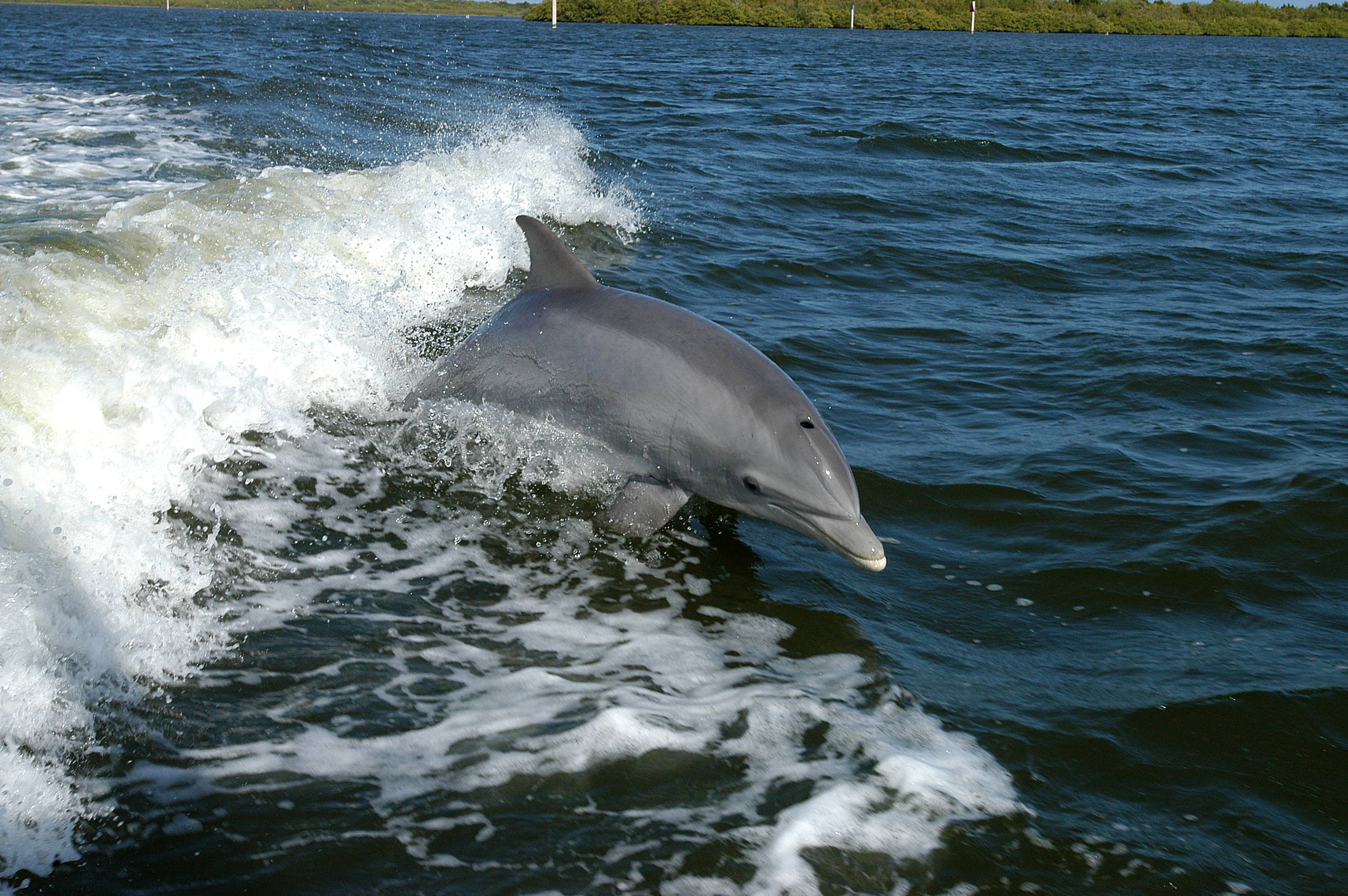
By the late 1950s Lilly had become convinced that the bottlenose dolphin, with its large and complex brain, might be a second intelligent species sharing the planet. He founded the Communication Research Institute on St. Thomas, in the U.S. Virgin Islands, and in the early 1960s published papers reporting that dolphins could mimic the patterns of human speech. His book Man and Dolphin came out in 1961.
In 1961 Lilly was invited to the Green Bank Observatory meeting on detecting extraterrestrial intelligence. The attendees liked his work enough to nickname themselves the Order of the Dolphin. NASA put money into his research, on the reasoning that learning to talk to a nonhuman mind on Earth was decent practice for meeting one elsewhere.
The most famous experiment took place at the St. Thomas lab, where part of the building was deliberately flooded so that a human and a dolphin could live together. A young researcher, Margaret Howe Lovatt, spent months in that flooded space with a male dolphin named Peter, trying to teach him to form English words.
Where it went wrong
Colleagues at NIMH had introduced Lilly to LSD, and he began combining it with the tank. He wrote about those sessions in language that no grant committee was going to fund. "I traveled through my brain, watching the neurons and their activities," he reported in his 1972 book The Center of the Cyclone.
Then he extended the experiment to his animals. By 1964, according to accounts of the project, Lilly was injecting dolphins with LSD and reporting that they became more vocal. Nothing resembling language emerged. The funding dried up, the project moved to a converted bank building in Miami, and Peter died there not long after being separated from Lovatt. Lilly told her he believed the dolphin had deliberately stopped breathing, a claim that cannot be verified but has been repeated ever since.
By the late 1960s, the Times noted, Lilly had moved away from mainstream science and was no longer working under government grants. His later books describe a cosmic bureaucracy he named the Earth Coincidence Control Office, which he believed arranged meaningful coincidences in human lives, and a hostile machine civilization he called Solid State Intelligence.
He died in Los Angeles on September 30, 2001, aged 86. Hollywood had already written two versions of him: The Day of the Dolphin in 1973 and Altered States in 1980. A fair epitaph came from the dolphin researcher Diana Reiss, who told the Times: "He got people really thinking about big brains in other body forms."
What floating does, according to the evidence
The tank outlived its inventor's reputation. Researchers now call the practice flotation REST, for reduced environmental stimulation therapy, and the modern version is a shallow pool saturated with Epsom salt so that the body floats without effort.
The best known study appeared in PLOS ONE in 2018. A team led by Justin Feinstein put 50 people with anxiety and depression through a single one-hour float. Reported anxiety fell sharply, along with stress, muscle tension and pain, and the effect was largest in the most anxious participants. The authors were candid about the limits. The study was open label, had no control group, and could not say how long the relief lasted.
A 2024 randomized trial of 75 participants from the same research group was designed to test safety and feasibility across six sessions, rather than to prove a treatment effect. It found no serious adverse events, and most people kept showing up.
So the honest summary is modest. Floating appears safe and reliably relaxing in the short term. Whether it treats anything over the long term is still an open question, and nothing in the research supports contact with other dimensions.
The useful half of a strange legacy
Lilly's life is usually told as a warning about a scientist who became his own favorite subject. That reading is fair. He stopped checking his conclusions against anything outside his own head, and animals in his care paid for it.
But the original question was a good one, and so was the tool he built to ask it. Take away the world, and the mind keeps going. Seventy years later, researchers are still working out what that means, using a quieter version of his tank and a great deal more caution.